App in development. Waitlist open.
Know what's in your food before it's in your cart.
Every ingredient explained in plain English. Allergens, added sugars and confusing label terms flagged, and each explanation linked to the FDA or USDA rule behind it.
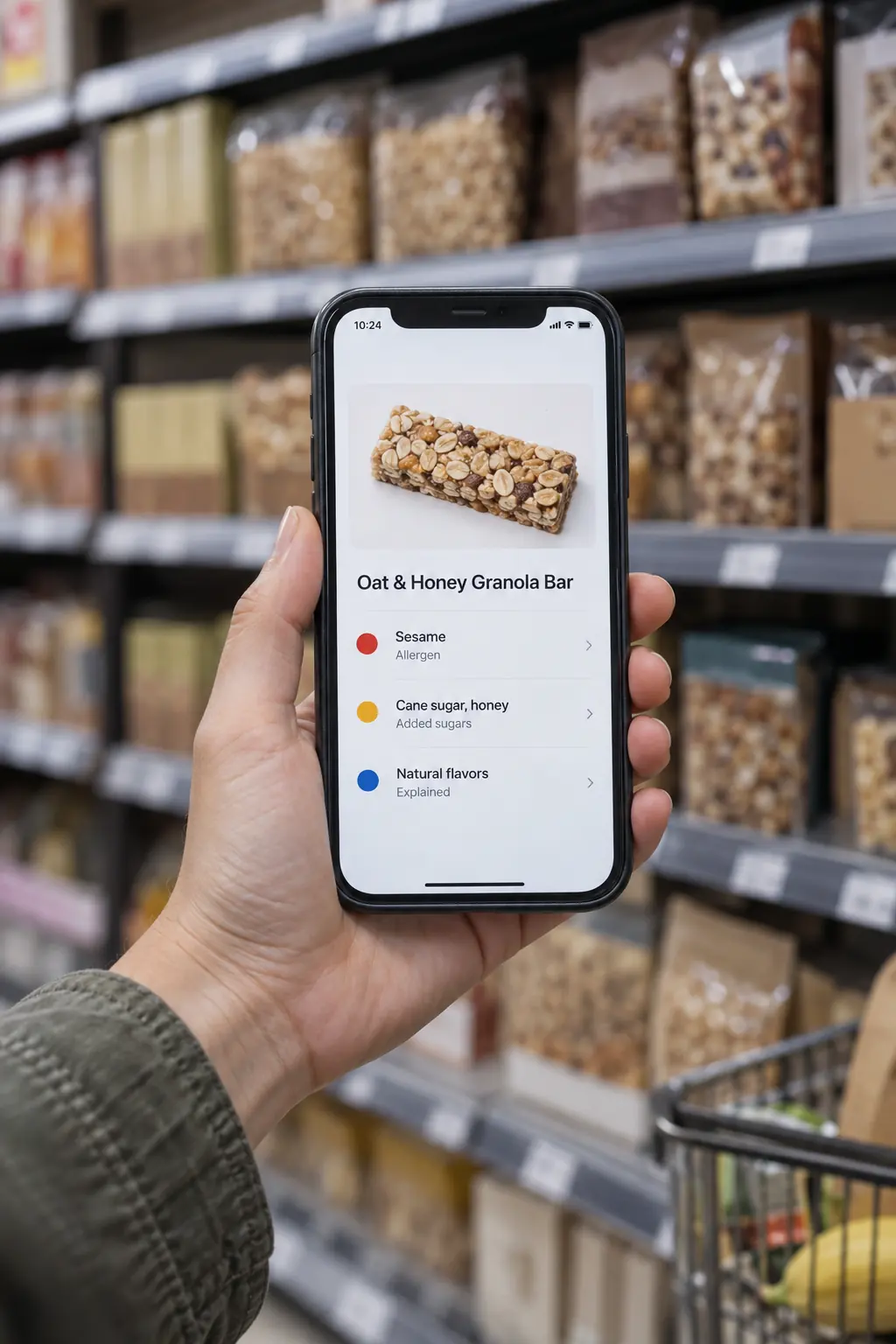
Start here
Short answers first, then the evidence. Every claim links to the law, regulator or study it comes from.
Which food ingredients are banned in Europe but allowed in the US?
Titanium dioxide, propylparaben, potassium bromate, azodicarbonamide and BVO aren't authorized in the EU. Red 40 isn't banned; it needs a warning label.
- Authorization revoked in the EUTitanium dioxide (2022), propylparaben (2006)
- Not on the EU authorized listPotassium bromate, azodicarbonamide, BVO
- EU warning label, not a banRed 40, Yellow 5, Yellow 6 and 3 more colors
- AdditiveIs Red 40 banned in Europe?No. Red 40 (E 129) is authorized in the EU, but foods with it must carry a warning label. In the US it is authorized, and the FDA wants it phased out.
- GuideHow do I check if a food I bought is recalled?Match the brand, product, size, UPC, lot code and date on your package against the official notice. The steps, and the free FDA and USDA tools.
- GuideWhat is the best food scanner app? Six apps compared by price, platform and sourcesYuka, Bobby Approved, Exposr, Oasis, Fig and Open Food Facts compared on price, platforms, method and recall alerts, from each app's own listing.
How the app will work
Ingredient lists are written to meet regulations, not to be easy to read. The app reads the label for you and shows its work.
-
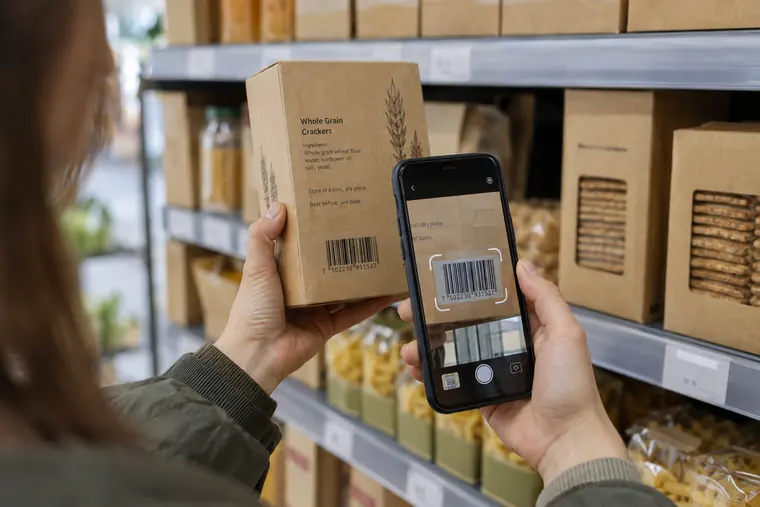
Scan the barcode
Point your camera at any packaged food or drink, in the store or in your pantry.
-
See what's flagged
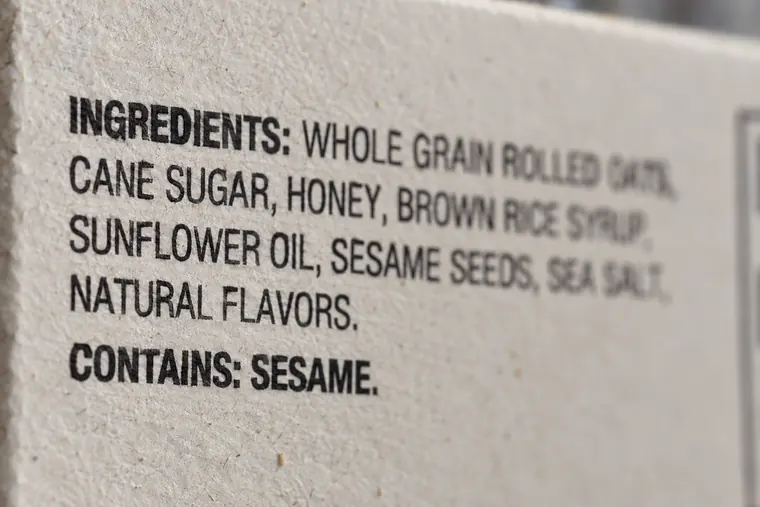
Allergens, added sugars and hard-to-read terms are pulled out of the list and labeled.
-
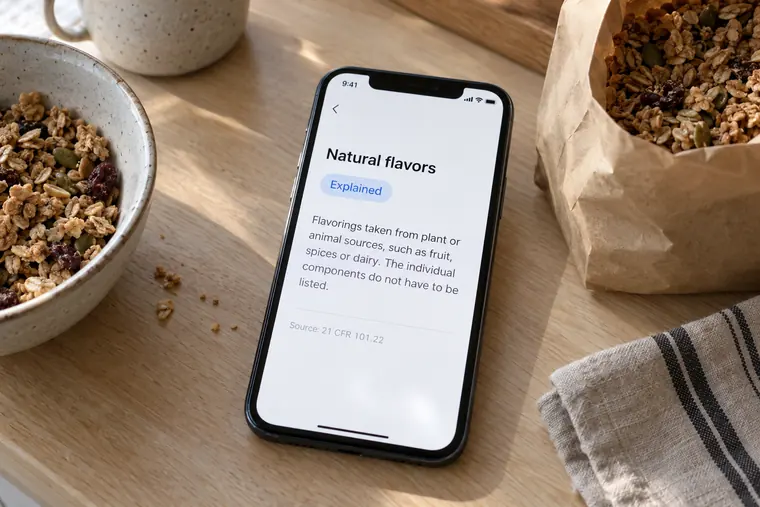
Read the plain-English why
Tap any ingredient to see what it is, why it's used and the regulation it comes from.
What the app flags
Here's a real-style ingredient list, read the way the app reads it. Choose a flag to see which words it covers.
We're also building explanations for color additives and preservatives, and alerts when a product you've scanned appears in an FDA or USDA recall notice.
Label facts, with sources
The kind of thing we cover in our videos. Short, general, and linked to the regulation or agency page it comes from.
- Flavors
"Natural flavors" is a legal term
It covers flavorings taken from plant or animal sources, like fruit, spices, meat or dairy. The individual components don't have to be listed.
Source: 21 CFR 101.22
- Nutrition Facts
"0 g trans fat" can mean a little
A label can round trans fat down to 0 g when a serving has less than 0.5 g.
Source: 21 CFR 101.9
- Allergens
There are 9 major food allergens
Milk, eggs, fish, shellfish, tree nuts, peanuts, wheat, soy and sesame. Sesame joined the list on January 1, 2023.
Source: FDA
- Dates
"Best by" is about quality
Apart from infant formula, federal law doesn't require date labels, and "best if used by" describes peak quality rather than safety.
Source: USDA FSIS
More guides
Longer explainers, answer first, every claim cited.
- Guide
What does "bioengineered" mean on a food label?
"Bioengineered" is the USDA's required label for foods with detectable genetic modification (7 CFR Part 66): what it covers, formats and exemptions.
- Guide
How do you read a food label? Ingredients, Nutrition Facts, allergens and dates
US food labels in plain English: ingredient order, Nutrition Facts, added vs total sugars, the allergen Contains line and best-by dates.
- Guide
What does "natural flavors" mean on a food label?
Natural flavor is a legal term in 21 CFR 101.22. The full definition, how it differs from artificial flavor, and what labels must disclose.

Be first to try it
We're building the app now. Join the waitlist and we'll send one email when it's ready to download.
Watch the videos
Short daily videos on food labels, ingredients and recalls. Every claim comes from a public source we link to.